
How Becoming a Mom Changed the Way I Plan Travel (Even When I Didn't Notice It)
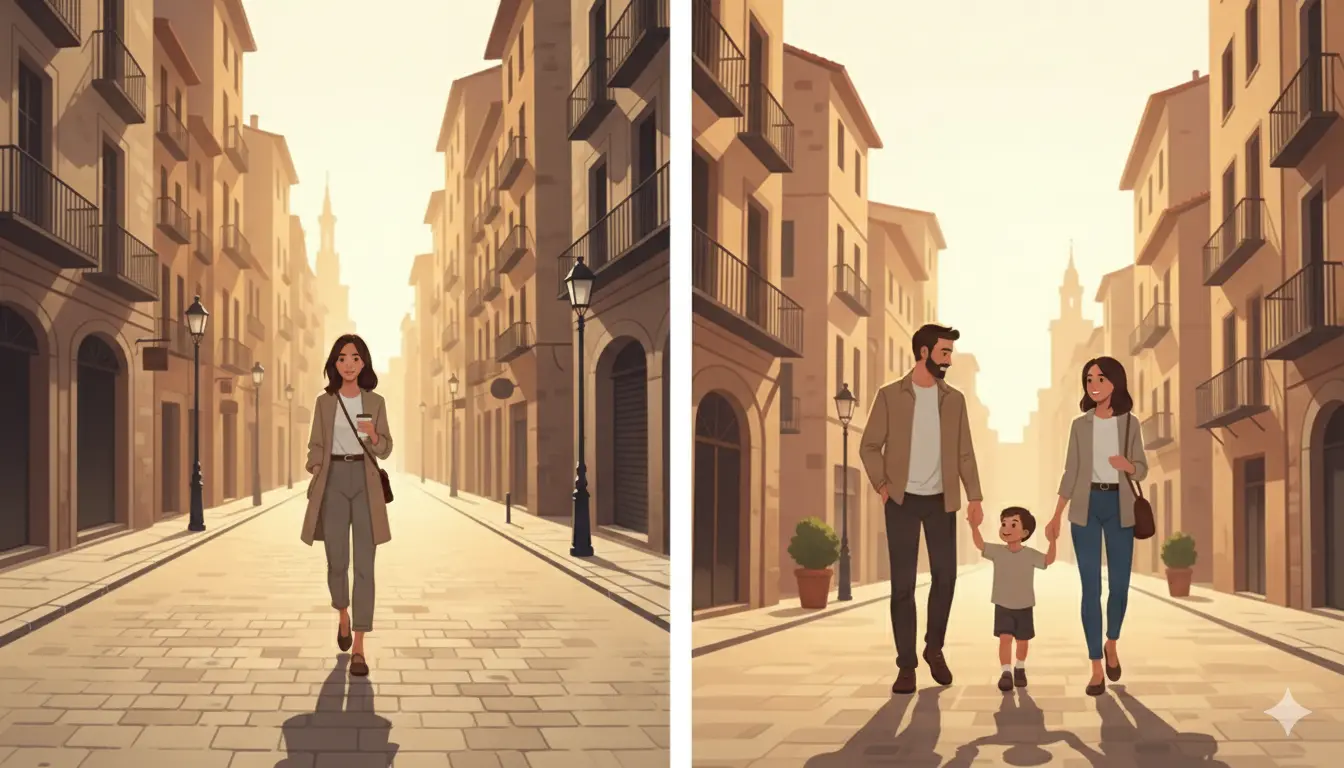
For years, I thought my travel style was consistent.
I liked walking cities. Good food. Cultural landmarks. Days that felt full but intentional. When I look back at my itineraries from 2015–2019, they read confident and ambitious — tightly structured, carefully optimized.
Then I had a child in 2020.
And travel stopped — for everyone.
What surprised me later wasn't that travel changed after having a kid.
It was how invisible that change was at first — and how clearly it showed up once I started traveling again.
This isn't a story about logistics.
It's about mindset.
The Year Travel Didn't Tell the Truth
If you look only at my travel history, you wouldn't see a clean break in 2020. COVID flattened everything. No flights. No itineraries. No planning energy.
From a data perspective, 2020 is a blank year — not a transition.
The real shift only becomes visible in 2022, when travel resumes and something important doesn't come back:
My old way of thinking about trips.
When I looked at our travel patterns over the past decade, the shift wasn't obvious at first — until I compared the structure of actual days.
What My Old Itineraries Optimized For
Before kids, my itineraries were about coverage.
- •How many neighborhoods could we walk?
- •How many landmarks could fit in one day?
- •How late could dinner be without ruining the next morning?
- •How efficiently could we move between cities?
A "good day" was a productive day.
White space felt like waste.
Looking back, those itineraries were quietly performance-driven. Not for social media — for myself. Proof that I was doing travel right.
When we visited Barcelona before kids, our days were stacked — market, museum, long lunch, cathedral, late dinner, repeat.
Barcelona is a perfect example. We visited once before kids — and later as parents — and the difference wasn't the city. It was the way I structured the day.
What Changed (Without Me Consciously Deciding)
When travel came back, the structure was different — even though I never said, "I'm going to plan differently now."
The changes were subtle but consistent:
- •Fewer activities per day
- •Tighter geographic clustering
- •More open-ended blocks
- •Earlier endings
- •Fewer "must-see" checklists
On paper, the itineraries looked simpler.
In reality, they required more thought.
That's the paradox of traveling as a parent:
Less visible planning. More invisible planning.
Even fine dining — something I still deeply value — shifted in tone. I still seek out thoughtful restaurants. I just think differently about timing, pacing, and energy.
The Mindset Shift I Didn't Name at First
Somewhere along the way, my definition of success changed.
Before
- Did we see everything?
- Can we squeeze this in?
- A full day is a good day.
Now
- Did everyone have enough energy to enjoy what we did?
- What happens if this runs long?
- A calm day is a good day.
I stopped optimizing for output and started optimizing for experience quality — not just for my child, but for myself too.
Travel Didn't Get Smaller — It Got More Honest
One of the biggest myths about travel with kids is that it becomes limited. Looking at my itineraries, that's simply not true.
I still:
- •Travel internationally
- •Prioritize food and culture
- •Walk cities
- •Choose depth over novelty
What changed wasn't where I went.
It was what I expected from a day.
I no longer plan to impress a hypothetical version of myself.
I plan for the humans who are actually there.
What I Understand Now
Having kids didn't ruin travel.
It removed the illusion that travel is about maximizing anything.
It taught me that planning is not about control — it's about care.
And when I look at my itineraries now, I don't see less ambition. I see better judgment.
When I started building TravelTreasure, I realized I wasn't trying to recreate my old itineraries.
I was trying to design a tool that supports better judgment — the kind that leaves room for energy, flexibility, and real presence.
Frequently asked questions
Does travel with kids mean you see less?
Not necessarily. You may see fewer landmarks in a day, but you often experience places more deeply and intentionally.
How do you balance structure and flexibility when traveling with a child?
I cluster locations geographically, build in buffer time, and plan for earlier endings. The structure is tighter — the timing is looser.
Do you still prioritize food and culture when traveling with kids?
Absolutely. I still seek out thoughtful restaurants and meaningful cultural experiences — I just plan them around energy rather than ambition.
How has motherhood influenced the way you design itineraries?
I no longer optimize for coverage. I optimize for how the day will feel.